TL;DR - Your inbox is not really yours. It is a leased advertising surface, rented out by every company you have handed your address to. Unsubscribe does not work, because it tells them the address is live. The fix is to stop giving out your real address: use a different forwarding address per site and delete the ones that misbehave. I ran an alias service on this idea and am winding it down now, so I will point you at the alternatives.
You think your inbox is yours.
It is not. It is a billboard. The space inside it is rented out, sold off, and re-sold by every company you have ever handed your email address to.
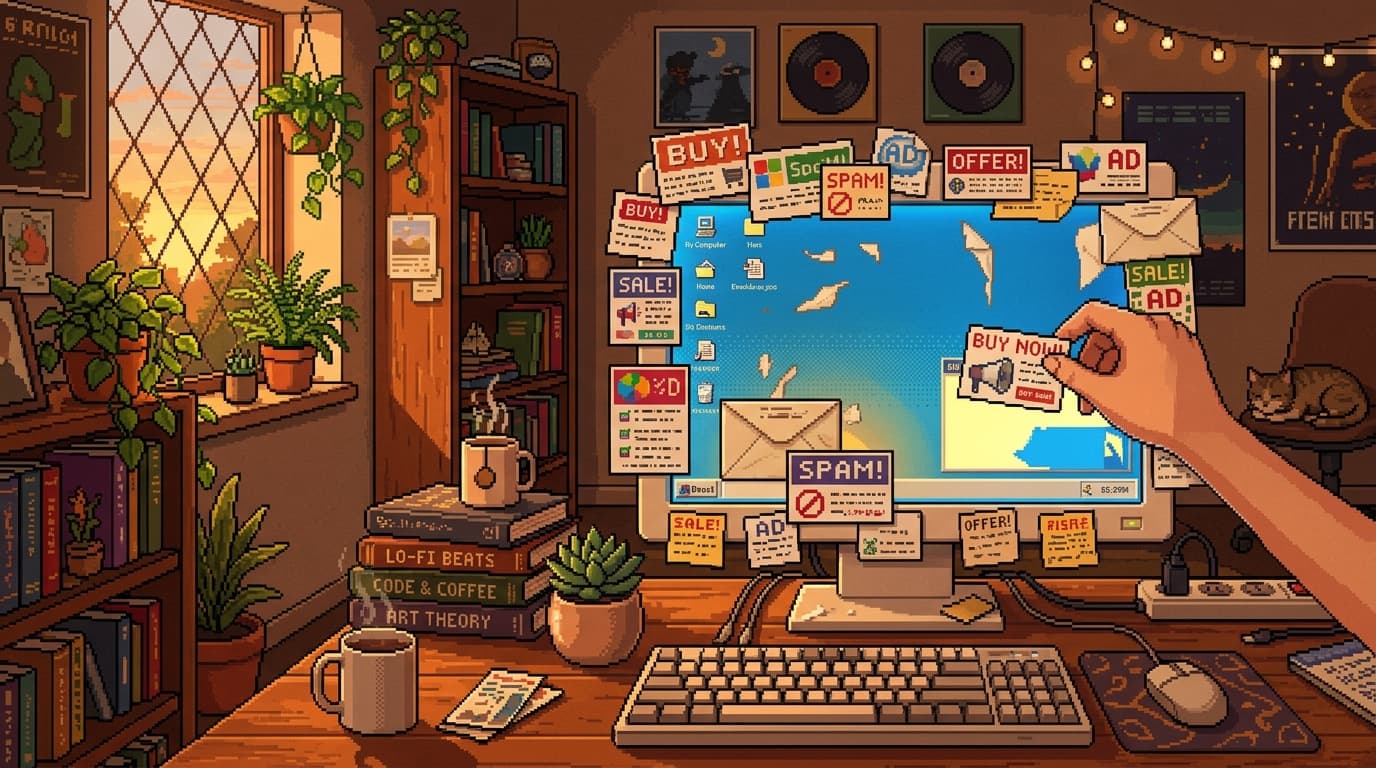
The Tuesday morning your inbox is full of "we miss you" emails from a trial you cancelled six months ago, and a yoga studio you visited once in 2021, and three "exclusive offers" from companies that bought your address from a fourth company you do not remember signing up for, that is what your inbox actually is. Not yours. A leased advertising surface that you do not get paid for.
How we got here
Email was supposed to be a personal address. You give it to your friends. You give it to your bank. End of list.
Then the internet happened. Every site needed a way to identify you, and your email turned out to be a perfect natural primary key. Stable. Unique. Already exists. Now it is not just an address, it is the identifier. Your name might be John Smith, and there are a million John Smiths. There is exactly one john.smith.1987@gmail.com.
So now every site asks for it. The shopping cart asks. The free PDF asks. The "are you over 18" gate asks. The wifi at the coffee shop asks. The article you wanted to read asks.
And every one of those addresses goes into a database. And every one of those databases eventually gets breached, sold, merged into a marketing platform, handed to a "partner", exported by an employee leaving for a new job, or mined by an AI training on customer data. You gave each company one little piece of yourself. They turned it into ad inventory. The next time you open your inbox and there are 47 unread messages, only 3 of which are from actual people, that is the bill coming due.
Why "just unsubscribe" does not work
You know the routine. You see the spam, scroll to the bottom, click "unsubscribe", check the box, confirm, read the "you have been unsubscribed" page that helpfully offers a re-subscribe button, and close the tab feeling like you did something.
You didn't.
Here is what actually happened: the company now knows the address is active. A real human read the email and cared enough to want it to stop. That is the most valuable signal a marketing list can have. Most lists with a working unsubscribe button do not delete you, they move you to a "suppressed" segment that gets re-sold to a partner, who emails you under a different brand from a different domain, with a brand-new unsubscribe link that does the same thing.
This is not a conspiracy theory. It is just how email marketing works. It is a multi-billion-dollar industry built on the assumption that you cannot actually leave.
The trick
There is a trick. You do not give them your real email.
You give them an address that forwards to your real email, a different one for every site. When the site starts spamming you, or sells your address to a partner who spams you, or gets hacked and leaks your address to everyone, you do not unsubscribe. You do not beg. You do not ask politely.
You delete the address.
The site now has nothing. There is no working email to send to. The "we miss you" campaign hits a wall. The retargeting pipeline collapses. The marketing partner who paid for your address gets a bounce. Your inbox stops being a billboard.
You do not need permission to leave a mailing list. You need a different address.
What changes
I run on this system. Every site, every signup, every "enter your email to unlock the discount", every wifi network gets a different address, most of them named after where I gave them out: amazon@my-domain, target@my-domain, that-yoga-studio@my-domain.
When something misbehaves, I do not have to remember which unsubscribe link is real and which one re-subscribes me. I do not email customer support. I do not wait 30 days for the unsubscribe to "process". I delete the address. It is instant and permanent, and I never hear from them again.
The first month I started doing this, my real inbox went from around 120 emails a day to around 12. The ratio of "things from people I know" to "things from companies that bought my email" went from about 1:40 to 1:1. I stopped checking email on weekends because there was no reason to.
What to actually use
I cared about this enough to build an email-alias service of my own, called SecureAlias. I am winding it down now (it turns out running a privacy service for an audience of mostly me is a hobby, not a business), so rather than pitch you my thing, here is the honest version: the approach matters more than the tool, and there are good ones built right into the things you already use.
If you take one thing from this post, it is: stop giving your real email to companies that want to sell it. A handful of ways to do that, all solid:
- Apple Hide My Email (built into iCloud+ and "Sign in with Apple").
- DuckDuckGo Email Protection (free, also strips trackers).
- Firefox Relay (from Mozilla).
- Proton's SimpleLogin (open-source, generous free tier).
Pick whichever fits your setup and start using it for anything that is not a friend or your bank. If you hate the first one, the others are right there.
The inbox should be yours. Take it back.